The Facility Walk
Part I. Lesson 3. Reading an Operation.
What Michael reads first: the manual processes, and how many people each one takes. That's where the labor cost concentrates.
Start by looking, not asking. Is it running, or worked around? An abandoned system isn't a lazy operation. It's a customer who tried something and went back to doing it by hand. Ask five questions about what's already there.
Then the one that matters most: would you install the same system again if you were starting fresh today?
How the process is designed to run. The way it works on a good day.
What it does under pressure. During a wave release when two zones pull at once and there's no time to scan.
Both are true. You need both, and the gap between them is usually where your project lives.
You already learned to think like the package. Now add the person. Somewhere inside the system you design, at two in the morning on the worst night of the year, one associate is standing in front of a jam with a truck waiting at the dock. Can that one person clear it alone, or does your elegant design need two people and a call to a vendor who won't answer? Michael's one maintenance guy is who you're really designing for. If he can't keep it running, it doesn't matter how well it ran on paper.
Two associates are moving as fast as they can, a carton is sitting in the wrong lane, and neither of them has caught it. Before you read another word, write down what that one carton tells you. Not what to do about it. What it tells you about the operation, right now, before anyone has quoted a single machine.
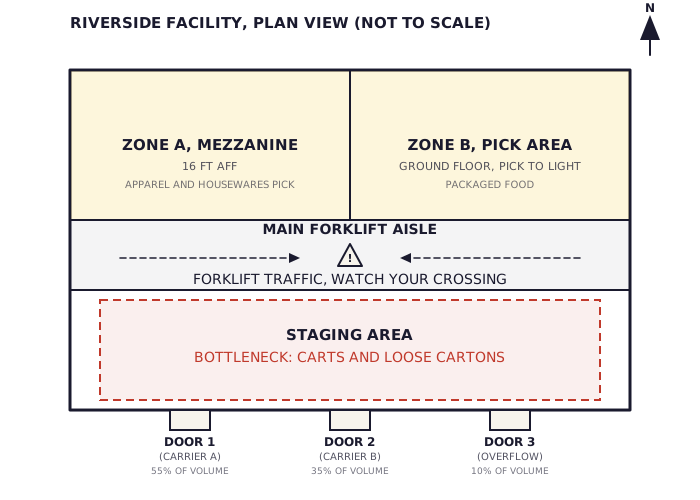
Start the facility readout page in your Riverside note. Write what this operation is telling you and what it has already told you it won't tolerate. Date it, and keep it where you can find it. Every decision you make later answers back to this page.
Next: What problem am I actually trying to solve?