PART IV | LESSON 13: ACCUMULATION DESIGN MATERIAL HANDLING ACADEMY
DRIVING QUESTION How much accumulation does this buffer need, and how should it release?
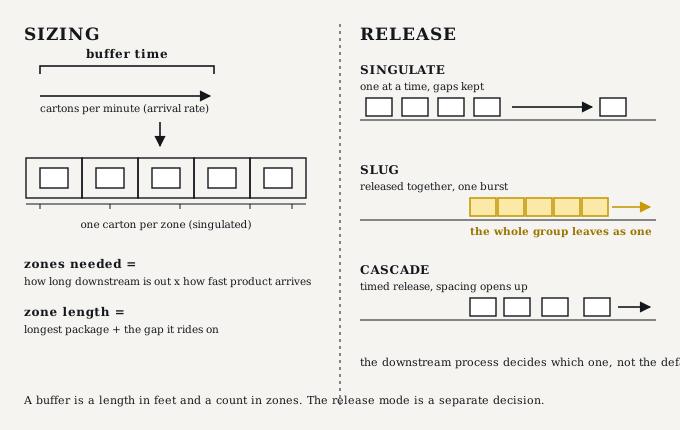
Two-panel figure. Left, sizing: a buffer-time bracket over a cartons-per-minute arrow resolves into a row of accumulation zones holding one carton each, with the rule that zones needed equals how long downstream is out times how fast product arrives, and zone length equals the longest package plus its gap. Right, release: three rows of accumulated zones at the moment of release, singulate letting one carton off with gaps kept, slug releasing the whole group at once in gold, and cascade releasing in a staggered stairstep, captioned that the downstream process decides which one, not the default.

Sizing on the left, release on the right. One turns a buffer into feet and zones; the other decides how it lets go.

Size It From Two Numbers

Zone Count

How long downstream is out times how fast product arrives. Add margin for the wave you haven't watched yet.

Zone Length

The longest package plus its gap. Check the shortest case too, so a zone still senses the small one.

Weight Gate

A loaded zone carries the full stack. Run the heaviest case against the MDR rating. Past it, MDR is out.

Pick the Release on Purpose

Singulate

The default. One per zone; each releases as the zone ahead clears. Right for plenty of places, wrong for a starving sorter.

Slug

All zones release together as one group. The answer when a sorter induction wants product in a controlled burst.

Cascade

A timed delay between zones. More space in the group, and it softens the shock load on a pneumatic run.

DESIGN PRINCIPLE Size it for the worst wave, and let the downstream machine pick the release.