PART IV | LESSON 15: TRANSFERS AND MERGES MATERIAL HANDLING ACADEMY
DRIVING QUESTION What breaks when product changes direction, or two flows become one?
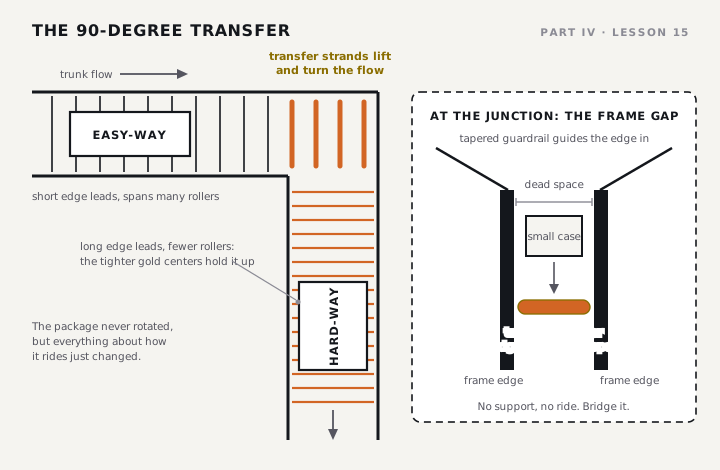
Top-down diagram of a 90-degree transfer. A carton rides easy-way on the trunk line spanning many rollers, then diverts onto a takeaway running at a right angle where it travels hard-way, long edge leading, over tighter gold roller centers. An inset shows the frame gap between two butted conveyor frames, a transition roller bridging it, and a tapered guardrail funneling the leading edge in.

The package never rotated, but everything about how it rides just changed.

The Transfer: Three Things to Design

Strand spacing

Enough strands under the package through the whole divert, or it rocks, tips, or misaligns.

Hard-way centers

Size the takeaway from the short dimension it's now riding on, not the long one it rode on the trunk.

Frame gap

Bridge the dead space with a transition roller and taper the guardrail so the leading edge feeds in.

Merges: One Principle, One Hard Rule

The principle

The PLC releases one lane at a time so product zippers into single file. Controlled release is the whole basis of merge reliability.

The hard rule

Never feed air-based accumulation directly into a merge. Air is fickle. Put a belted section upstream for positive control.

DESIGN PRINCIPLE Watch the package, not the conveyor.