PART V | LESSON 22: DATA AND DECISIONS MATERIAL HANDLING ACADEMY
DRIVING QUESTION What has to move between systems, how fast, and what happens when it doesn't arrive?
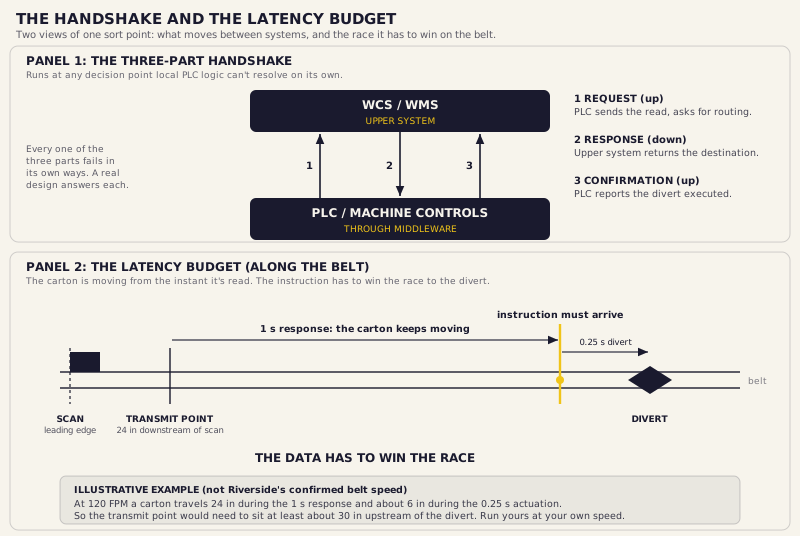
Two panels. The top panel shows the three-part handshake: a PLC machine-controls box and a WCS/WMS upper-system box with three arrows between them, request going up, response coming down, confirmation going up, each tagged with its job. The bottom panel shows the latency budget as a timeline along a belt: a carton at the scan trigger, a transmit point 24 inches downstream, the distance the carton travels during the 1-second response, a gold marker where the routing instruction must arrive, and the divert, with an illustrative figure at 120 feet per minute.

One sort point, two views. What moves between the systems, and the race the answer has to win.

The Three Data Questions

What information?

Needed to make the correct decision. A barcode, a weight, a destination code, an order status.

Where from?

The source of that information. Embedded in the barcode at the machine, or a lookup from a higher system through middleware.

Who decides?

Who makes the call. The PLC on local logic, or a request up to the WCS or WMS and a wait for the answer.

The Three-Part Handshake

Machine to upper system

1. Request

The PLC reads the identification and sends it up through middleware with a request for routing.

Upper system to machine

2. Response

The WCS or WMS looks up the item, picks the destination, and returns the routing instruction.

Machine to upper system

3. Confirmation

The PLC executes the divert and reports back that the item reached its assigned destination.

CARRY THIS OUT Response time is physical.