Read It Up and Down, Not Left to Right
Part VI. Lesson 26. Reliability Engineering.
"First one was a pneumatic accumulation system. Worked fine for about four months. Then the compressor started having issues. Air pressure would drop during peak volume and the zones would stop releasing cleanly. Maintenance calls started coming in. Nobody was trained to work on it. The vendor sent someone out twice. After that the operators started pushing product around the jammed zones by hand. Six months after install it was off and we were back to manual."
"Second one. When anything downstream slowed down, everything stopped. The whole line. Every time. We lasted three months before it came out."
Neither system died because a formula was wrong. The first died because the air it depended on wasn't stable and nobody on site could work on it. The second died because one slow spot stopped everything behind it.
A system can hit every number on paper and still be off the floor inside a year.
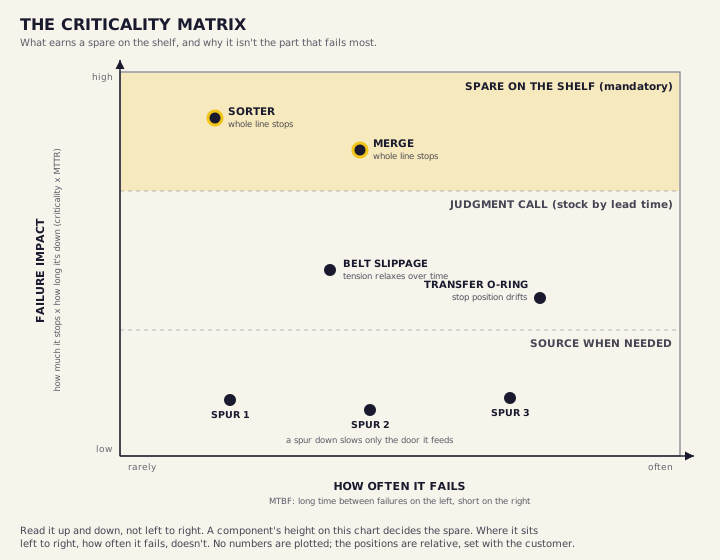
Holding spares for whatever fails most often. Frequency is the wrong sort key. A part that fails weekly but is in stock and swaps in five minutes needs no shelf spare. The rare failure that idles the whole line for a week while a long-lead part ships is the one that earns the shelf. Stock by criticality and lead time, not by failure count.
Be Michael for a second. It's a weekday, you're the only maintenance person in the building, and a motor on the decline just quit. Can you reach it? Can you get it out without a second person and a ladder? Is the spare on the shelf or three days away? The reliability of this system isn't a number on your analysis. It's whether the one person who has to fix it actually can.
"I just want to make sure somebody actually thinks about how this thing gets maintained and not just how it gets installed."
Build the reliability plan: start the FMEA from the failure modes this site has already shown you, rank criticality against the Riverside architecture, decide spares for a maintenance team of one, and set the MTBF and MTTR targets with Dana and Michael. No invented numbers. That's the third piece of the validation package.
Next: Is this system safe for the person who works beside it and fixes it at 2 AM?