Callouts by Trade
Part VII. Lesson 28. The Drawing Is the Plan.
Steel gets bolted to the floor. Wire gets pulled. Panels get mounted and sensors get placed. Every one of those trades is working from the drawing you produced, and not one of them was in the room when you made the decisions behind it. Your drawing is the only version of your thinking they ever get to see.
The phone stays quiet when the plan is complete. It starts ringing the moment it isn't.
When the drawing is right, everything downstream can be right. When it's wrong, incomplete, or ambiguous, the trades fill the gaps with assumptions. Assumptions on paper cost a redraw. Assumptions in the field cost money and time, in front of the customer.
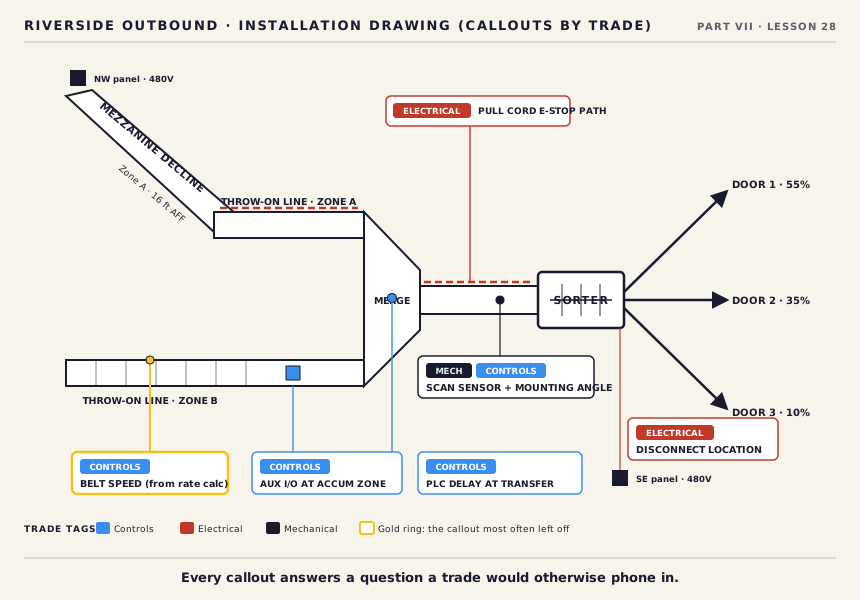
Leaving the speed callouts off the drawing. Every belt speed you calculated to hit the throughput target means nothing if it isn't on the sheet the controls team programs from. They program what they receive. If the setpoints are missing, they estimate, and an estimate isn't engineering. This is why the gold ring on the drawing sits on the speed callout. It's the item that got the most calculation behind it and gets left off the sheet the most.
If you're about to release a drawing for construction, then call every vendor individually first and ask each one the same question: what do you need to see on this drawing that isn't there yet. Tradeoff: three phone calls and a day you'd rather spend finishing the sheet. Verify: the answers will improve every drawing you ever produce, and the callout you add today is the RFI you don't answer next month.
The drawing is the golden plan. Every trade on the job site is working from what you put on it. If the speed callouts are missing, the controls team doesn't know what the plan was. If the pull cord path isn't shown, the electrical contractor doesn't know it's required. If the equipment dimensions are wrong, the mechanical installer builds to the wrong footprint. Get the drawing right before the project mobilizes. Everything else depends on it.

Vendors price what they're told, and only what they're told. The gap between what you scoped and what they priced comes out of project margin, and it's your gap, not theirs. You own the scope definition.
Every vendor receives the same scope. Every quote gets reviewed against the design, and every gap gets documented. The gap you catch here costs a phone call. The gap the vendor catches after award costs margin.
Every setpoint and dimension the earlier deliverables produced now lands on one drawing: belt speeds by section, the VFD ramp on the mezzanine decline, the scan and sensor locations, the PLC delays, the accumulation release modes, the pull cord E-stop path from the guarding audit, the Aux I/O locations, and the disconnects at both 480V panels.
Run the pre-release interview. Call mechanical about the decline landing and the forklift-crossing structure. Call electrical about the pull cords and the VFDs. Call controls about the WMS interface and the setpoints. The walkthrough where every trade reads the drawing together is a separate meeting, and it belongs to Part VIII.
Next: Does this system pay for itself, and can I prove it?