Part VII. Lesson 30. The Proposal.
Engineering a system correctly is one skill. Turning that work into a proposal a customer can understand, trust, and sign is a different skill, and most engineers only ever train the first. The ones who build both are the ones who close projects.
A proposal isn't a sales document. It's an engineering communication. Its job is to give the customer enough accurate information to make a real decision. Not enough to feel good about the system. Enough to decide.
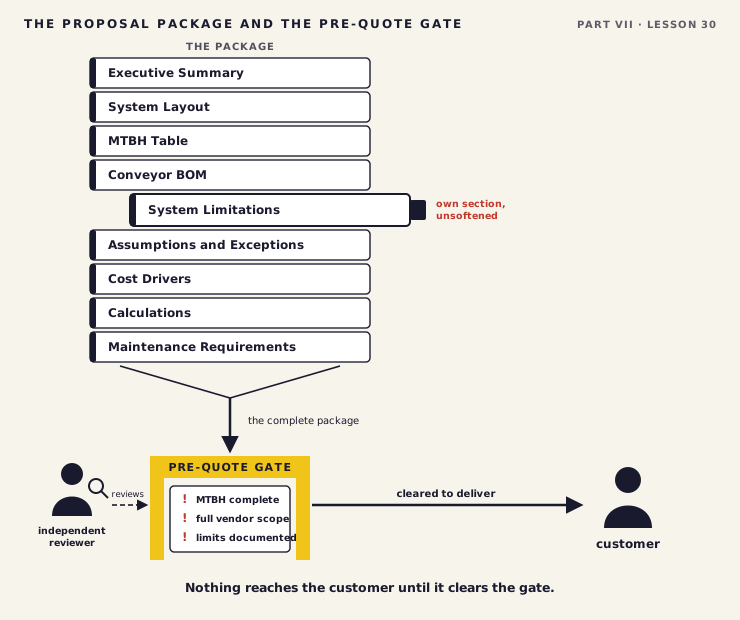
Show the solution clearly. Document what it does well. Be honest about what it doesn't do. The executive summary leads the package, two paragraphs, outcomes only, so a business buyer who reads nothing else still leaves with the decision.
"The system may have difficulty with packages over 30 pounds."
"The system maximum product weight is 28 pounds."
Limitations live in their own labeled section, every limit listed, none softened. If a limitation isn't in the proposal, the customer assumes the system handles it.
Softening a limitation to make the proposal look better. You write that the system "may have some difficulty with heavier packages" instead of stating the maximum weight is 28 pounds. The soft version reads fine and protects nothing. When a 35-pound carton jams the sorter three weeks after go-live, the customer doesn't remember a gentle qualification. They remember that nobody told them the number.
Anything you feel is a limitation of the system should never be a surprise to the customer. Show them the good side, highlight what the solution does well, but put the limits right in there. Weight, speed, throughput, product size. All of it. A customer who understands the system they're buying is a customer who stays your customer. The one who finds out after install that it can't do what they assumed is the one who calls somebody else next time.

Assemble the proposal package for Dana, Tom, and Michael. Executive summary in outcomes for Dana and Tom. Plain-language system description for Dana. Every limitation stated as a number. Every assumption and exception documented with its reason. The with and without options for the Small Case and the Tall Case.
And the maintenance conversation addresses Michael by name. He has watched two systems fail. He deserves an honest answer. Then run the pre-quote gate and hand the checklist to an independent reviewer before it leaves your desk.
Next: Who is in the room, and how deep do they need me to go?