Part VII. Lesson 31. The Room.
You've built the proposal package. Now you have to present it, and the room you present it to isn't one buyer. The person who evaluates your engineering and the person who approves the budget are often not the same person, and sometimes they're sitting at the same table. You get one meeting to serve both.
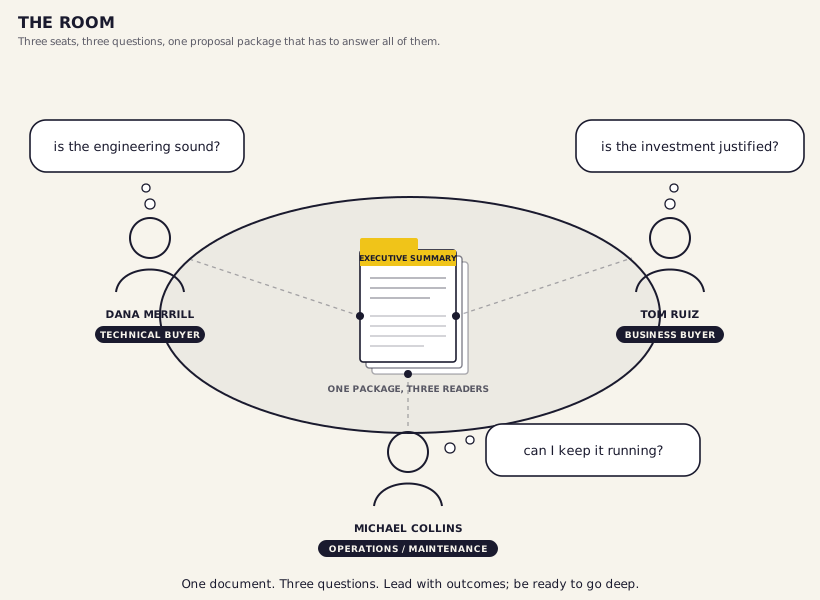
At Riverside the room has three people, and the professional standard is to go as deep on the engineering or as high on the business case as it asks, without missing a beat.
Is the engineering sound? Wants the layout, the equipment selection, the calculations, the controls logic.
Is the investment justified? Wants outcomes, payback against the company threshold, and defensible inputs.
Can his one-person team keep it running? The seat most proposals forget.
Leading a business buyer with engineering. You open the meeting with the sorter model, the belt speeds, and the controls topology, because that's the work you're proudest of. The finance chair came to hear what it returns and when it pays back, and by the time you reach the payback you've already lost the room. Lead with outcomes. Earn the right to go deep.
Structure every proposal the same way, no matter who's in the room: executive summary and business outcomes first, technical detail after. Two paragraphs. What the system does, what problem it solves, what the customer gets. No model numbers, no jargon.
A business buyer who stops reading after page two still walks away with the whole business case, and a technical buyer who wants the detail finds it exactly where they expect it. One document, structured once, serves both.
Michael has watched two systems fail and come back out. When he asks how this one gets maintained, he isn't making conversation. He's deciding whether to trust you. Answer him the way you'd want to be answered if you were the one keeping it running at two in the morning with one technician: honestly, specifically, and without a sales word in it.
We usually go into more technical detail with a technical buyer, but the proposal and the drawings need to carry both the technical detail and the high-level summary. You need the backup knowledge to support either kind of buyer. You should be able to walk into any meeting and go as deep or as high as the room requires without missing a beat. The day you can do that, the room stops feeling like a test and starts feeling like a conversation.

Open the executive summary at Dana and Tom together, in outcomes: the misdirects stop, the staging bottleneck clears at peak, the manual sorting labor redeploys, and the case is justified against Tom's three-year threshold. Then go where each of them lives. Deep for Dana on the engineering. Outcomes and confirmed inputs for Tom. The honest maintenance answer for Michael, from the section that addresses him by name.
Then prep the defense: the single hardest question each of the three will ask, answered from the document, not from memory. And prep the outlier decisions, the Small Case and the Large Case, because Tom will ask.
Next: Before the first bolt turns, does everyone know what I know?