Part VIII. Lesson 32. The Handoff.
The proposal's approved, Tom signed off, Dana's ready to move, and the project's live. Your instinct is to call a vendor and order steel. Hold on. That's not the first move.
The first move is the handoff. Before anyone mobilizes, you get every trade on the same page about what you know that they don't. Get the handoff right and the project runs. Skip it and the phone starts ringing.
Every person on the job site works from your drawing. The mechanical installer positions equipment from it. The electrical contractor routes conduit from it. The controls team mounts panels, places sensors, and programs setpoints from it.
When it's wrong or incomplete, everyone working from it fills gaps with assumptions, and assumptions in the field cost money and time in ways assumptions on paper never do. The handoff is the moment you release that drawing as the plan and stand behind it. What belongs on it is Lesson 28's ground. Part VIII releases it and defends it.
We don't know what others don't know.
You engineered a belted induction section upstream of the merge for the air accumulation risk, and you assume the controls team knows why. They assume mechanical knows the transfer sensor sits offset from center by the PLC-delay amount. Nobody's wrong. Nobody communicated what they knew. That gap is where field problems get born.
So you run a meeting, not an email. You walk the drawing with every trade in the room and call out every non-obvious decision and the intent behind it.
A good handoff is one where the execution team and every vendor know where all the skeletons are hiding. The easy stuff isn't the problem. Everybody knows how to install a straight run of conveyor. It's the decisions that took judgment to get right that nobody else can see. We don't know what others don't know, so we've got to make sure everyone's on the same page. That means a meeting, a drawing walkthrough, and a specific callout for every non-obvious decision in the design. If you engineered something that needed judgment to get right, that judgment gets communicated before the project starts, not discovered in the field.
Treating the handoff meeting as a substitute for the drawing. A great walkthrough isn't a complete drawing. Verbal instructions given in a meeting get forgotten. A detail discussed out loud but never drawn doesn't exist when a dispute comes up six months later. The meeting surfaces the skeletons. The drawing has to stand on its own after everyone goes home.
Every interface between trades is a potential gap, because each trade assumes the other side's got it covered. Name each seam out loud in the room, and make one trade responsible for each side of it.
At the panels. Mechanical hands off to electrical.
At the Aux I/O and the WMS interface. Electrical hands off to controls.
Then confirm every vendor's working from the same scope, and agree the redline process before anyone mobilizes. Running that process is Lesson 33's job.
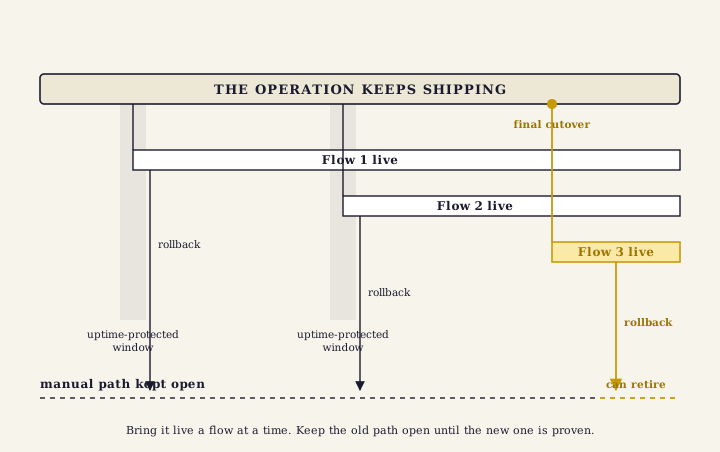
The customer ships every day and can't go dark, not even for one shift. You've got a system to install across their outbound floor. Before you schedule a single hour of disruptive work, name the one thing you protect above the install schedule, and the path you keep open in case a new section isn't ready on cutover day.
The well-reasoned answer to the Monday-morning debrief starts with the handoff, not the vendor call. Get the room right first: every trade that'll be on site, and Michael, the maintenance lead who works alone and has watched two systems fail on this floor. He's in the room from the start.
Surface Riverside's skeletons: the belted induction ahead of the merge, the mezzanine-decline landing, the offset transfer sensors, the forklift-aisle crossing. Then plan the cutover, phased by flow, with the manual staging path kept open as your rollback until each flow is proven.
Next: The build is live. What does the engineer still own?